

"Our democracy is so pure
that we can compare it to
the first that existed in the world,
such as the Greek democracy."
—Fidel Castro
There are seven aspects
of democratic socialism
that demonstrate it's a
misleading marketing slogan,
not a new version of socialism.
Proponents of the keto diet claim that the secret to weight loss is to severely limit carbohydrates and replace them with fats. This diet has become so popular that hundreds of products now have "Keto Friendly" emblazoned on their packaging.
Some keto-friendly products are truly new ones—products for which the recipe has been changed to reduce the carbohydrates.
But many items sold as keto-friendly have (but for a new label) not been altered in the slightest way.
Take bacon, for example. Bacon, by its very nature, has always been extremely low carb and high fat. Bacon adorned with a "keto-friendly" label wouldn't represent a new type of bacon, but rather a new way of selling bacon.
This is the story of "democratic" socialism.
Democratic socialism isn't some new socialism based on an altered recipe. It's not socialism reformulated to be democratic.
No, socialists have long considered socialism to be synonymous with democracy and to represent the only true democracy. As we'll see, they've claimed this for well over a century.
When socialists started adding "democratic" to their product's label, they were simply taking advantage of the socialist belief that their philosophy is intrinsically democratic, just like bacon is intrinsically low in carbs.
"Keto-friendly" bacon isn't a new and improved bacon, and "democratic" socialism isn't a new and improved socialism. Both are branding exercises, pure and simple.
There is, however, a critical distinction between these sales tactics. Labeling bacon as keto-friendly is surely marketing spin, but at least it's honest spin. Bacon is low in carbs and so meets the requirements of the keto diet.
But marketing socialism as democratic isn't just hype; it's dishonest and misleading hype.
Unlike "keto-friendly" bacon, "democratic" socialism has never been and never will be what the label claims. The fact socialists have convinced themselves that socialism equals democracy doesn't make it so.
Moreover, given the authoritarian history of real-existing socialism, the "democratic" sticker tricks the consumer into believing they're buying some revamped version of socialism when that's simply not the case.
How can we demonstrate that "democratic" socialism is a misleading marketing slogan and not a new version? This paper presents the details on seven different ways.
For more than a century, socialists have claimed that socialism is democracy
The first key to recognizing that democratic socialism is not some new version? It's understanding that socialists have long seen socialism as, by definition, democratic.
Socialists have long considered "socialize" to be the equivalent of "democratize."[1] And they've also long believed that anything that isn't socialism can't really be democracy.
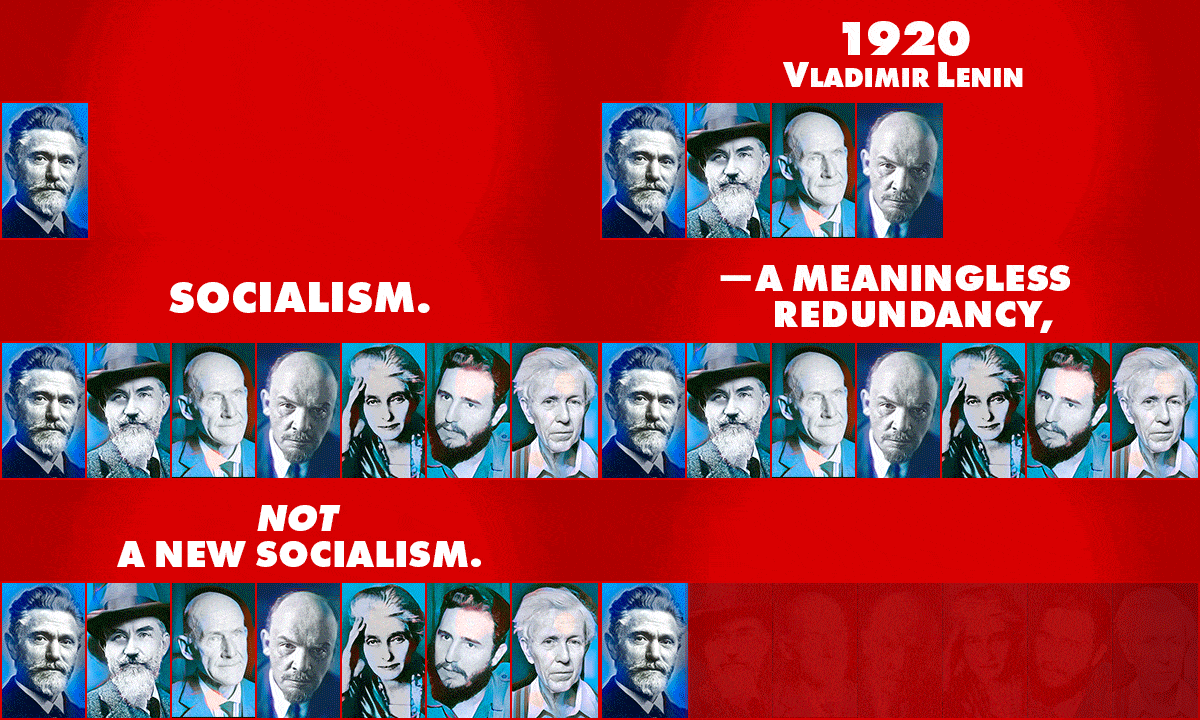
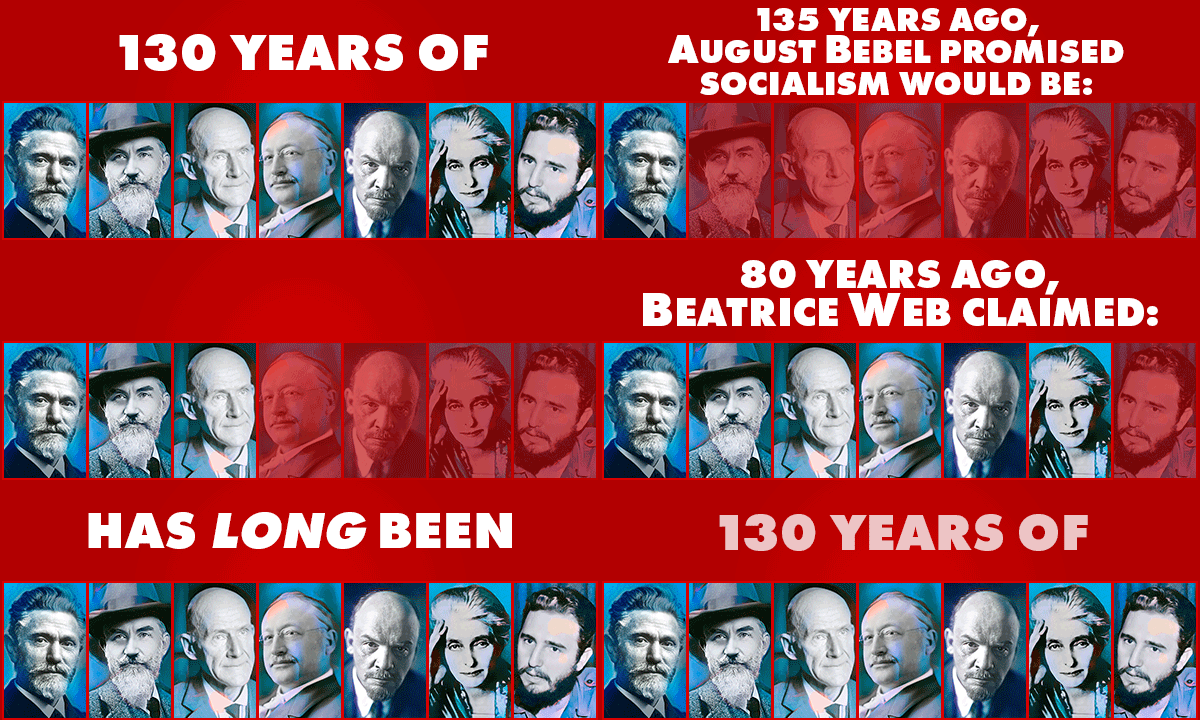
For over 130 years, socialists have considered "democratic socialism" redundant. When someone says "democratic socialism," socialists hear "socialist socialism."
Over a century ago, celebrated democratic socialist[2] Eugene Debs (Bernie Sanders's favorite American socialist[3]) consistently claimed that socialism is inherently democratic and the only true kind of democracy.
Here are three of the countless examples of Debs making this claim:
Change the system, socialize the means of life, establish economic freedom, and we shall have true democracy and self-government![4]
The only genuine Democratic party in the field is the Socialist party.[5]
Social democracy is the only democracy.[6]
Victor Berger, another American social democrat who wrote over a century ago, echoes Eugene Debs:
Social-Democracy will be the first real democracy that has ever existed.[7]
Socialism, or Social-Democracy, has never been tried.[8]
August Bebel is one of history's most famous socialist thinkers and a self-described "social democrat."[9] Writing in 1885, well before even Debs and Berger, Bebel promised that socialism means
a thoroughgoing democratic society.[10]
He also uses "social democracy" as a synonym of "socialism":
These are the Socialists, that is, the Social Democracy.[11]
And in the preface of the noted Fabian Essays in Socialism, published in 1889, Bernard Shaw speaks not only for himself but also for his seven socialist co-authors:
The writers [of Fabian Essays] are all Social Democrats, with a common conviction of the necessity of vesting the organization of industry and the material of production in a State identified with the whole people by complete Democracy.[12]
What will socialism be? "True democracy." "Real democracy." "Complete Democracy."
Also more than a century ago, Vladimir Lenin provided his view of the government he led in the Union of Soviet Socialist Republics (USSR), the world's first socialist state:
Proletarian democracy is a million times more democratic than any bourgeois democracy; the Soviet power is a million times more democratic than the most democratic bourgeois republic.[13]
As these five examples demonstrate, socialists have long considered socialism and democracy to be synonymous. And that's what socialists have claimed ever since.
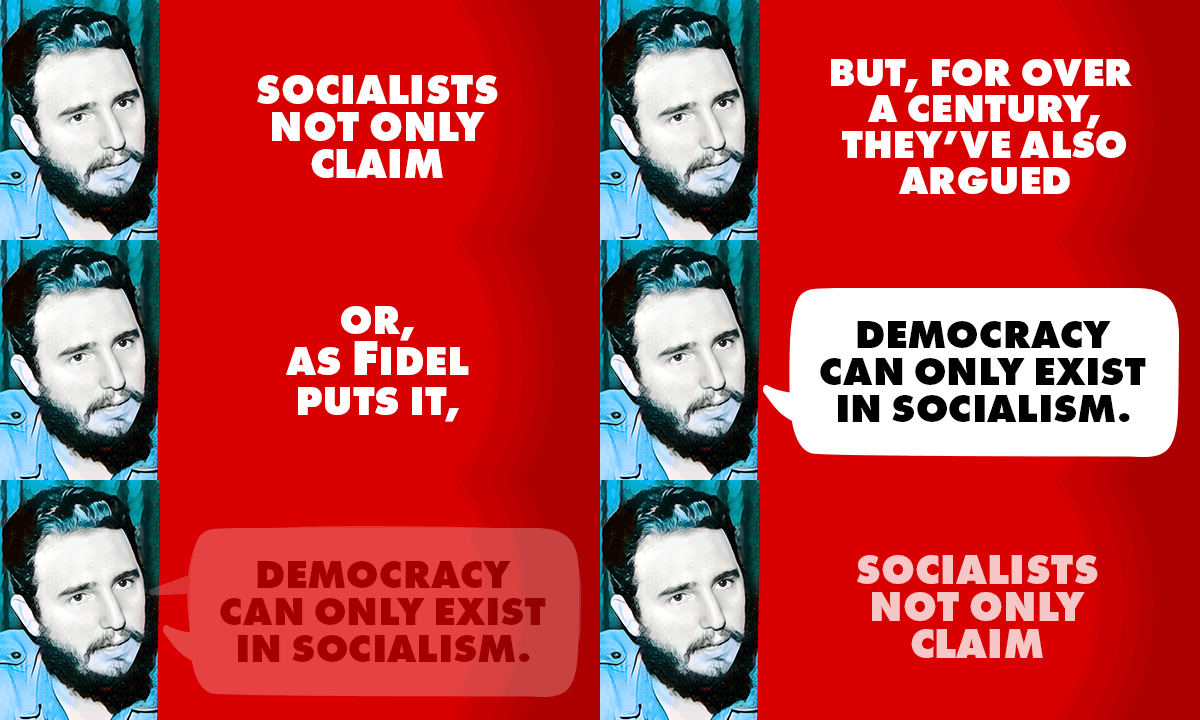
Cuban leader Fidel Castro makes the identical arguments decades after Debs, Berger, Bebel, Shaw, and Lenin. First, that there is no democracy outside of socialism:
I believe democracy can only exist in socialism.[14]
Second, that socialism means real democracy, pure democracy:
Those who want to find out what the real word democracy means should come to Cuba. Our democracy is so pure that we can compare it to the first that existed in the world, such as the Greek democracy.[15]
Democracy in Cuba was so pure that there were no elections—zero elections—in Cuba for seventeen years following the speech in which Castro's words above appeared.[16]
Democracy in Cuba is so pure that, when elections were permitted starting in 1976, only one government-approved candidate was allowed to "compete" for each office.[17]
But these facts don't keep socialists from claiming Cuban socialism as the real democratic McCoy.[18]
For well over a century, socialists have believed that socialism is democracy. When today's socialists pitch "democratic" socialism, they're simply putting the sales spotlight on what socialists have long considered a given attribute of their product.
Today's democratic socialism is not a new version; it's keto-friendly bacon.
To learn more about the socialist history of equating socialism and democracy, see our paper "Democratic Socialism? Déjà Vu All Over Again."
FOR MORE THAN A CENTURY, ESSENTIALLY ALL SOCIALISTS HAVE COUNTED THEMSELVES AS DEMOCRATIC SOCIALISTS
Socialists have believed that socialism is democracy for over 130 years. As such, it's no surprise that essentially all socialists have thought of themselves as democratic socialists for the same period.
Saying you are a non-democratic socialist would be like calling yourself a non-socialist socialist.
Moreover, there's no test one needs to pass to be called a democratic socialist. If you say you're one, you are. And as we'll see below, socialists who hold many exceedingly anti-liberal and authoritarian views—even calling human rights "rubbish"—are regularly held out as believers in democracy.
The specific labels "democratic socialism" and "democratic socialist" are the marketing taglines socialists have employed for roughly the last fifty years.[19] Before that, it was more common for socialists to sell socialism as "social democracy" and call themselves "social democrats."
Eugene Debs, Victor Berger, August Bebel, and Bernard Shaw all called their socialism "social democracy." It was the "democratic socialism" of their day.
Today, Eugene Debs is praised as a "democratic socialist,"[20] showing this term is synonymous with what Debs meant when he called himself a "social democrat" and led two parties using that name: Social Democracy of America and the Social Democratic Party of America.[21]
The word "socialism" doesn't appear in the term "social democracy," but Debs makes the link clear:
The Social Democracy is a socialist party and is pledged to the principles of socialism.[22]
The opening sentence of an article that socialist Frederic Heath wrote in 1900 about Debs's Social Democracy Party hits the nail on the head:
Social Democracy is but another term for democratic socialism.[23]
Social democracy = democratic socialism = socialism.
"Social Democracy of America" or "Democratic Socialists of America"? It's no different than labeling bacon "keto-friendly" or "friendly for keto."
All socialists unsurprisingly consider themselves to be true socialists. And since they equate socialism with democracy, they also see themselves as true democratic socialists.
But there have certainly been instances when the members of one socialist sect have claimed that those of another are not followers of the true faith. In these cases, it's common for those being labeled as heretics to be attacked for not believing in democracy.
The argument, however, isn't that the supposed heretics are non-democratic socialists. Rather, it's that they're not socialists at all.
For example, the thousands of American socialists who were supporters of Soviet leader Joseph Stalin not only accused socialist Leon Trotsky and his supporters of being against democracy, but they also argued that Trotsky and Trotskyites were fascists. Supporters of Trotsky returned the favor.[24]
If today's democratic socialism is a new and distinct version of socialism, why don't we find other socialists, past or present, claiming they are non-democratic socialists and reporting that their socialism has no plans to be democratic?
It's because "socialism" and "democratic socialism" is a distinction without a difference.
Socialists say democratic socialist societies have already existed
The cherry on top of socialists' century-long equation of socialism and democracy is that they've also claimed earlier socialist societies were democratic ones.
As we've seen, Fidel Castro claimed socialist Cuba is a democracy "so pure that we can compare it to the first that existed in the world, such as the Greek democracy."[25]
But there's an even more remarkable example of an earlier socialist nation being sold as democratic socialism in action: the Union of Soviet Socialist Republics, the USSR.
Yes, the government that today is considered the very definition of authoritarian socialism was long said to be a perfected democracy. Vladimir Lenin claimed that in the USSR, "Soviet power is a million times more democratic than the most democratic bourgeois republic."[26]
But it wasn't just those within Soviet Russia who portrayed it as the ultimate in democracy. Following the Russian Revolution in 1917, the claim that the USSR was the embodiment of democratic socialism was made by socialists worldwide.
It's a claim that continued to be made for decades, long after it became clear that Soviet citizens were perishing at the hands of their government.
Beatrice and Sidney Webb were influential British socialists and leaders of the socialist Fabian Society.[27] The Webbs toured the USSR in 1932 and wrote a book about their exceedingly rosy findings.[28]
In a new introduction for an edition published in 1942, Beatrice Webb reports her view that
the USSR is the most inclusive and equalised democracy in the world.[29]
Webb describes the USSR as the world's foremost democracy a quarter-century into the history of this first socialist experiment, and at a time when millions of Soviet citizens had already been murdered by their government.[30]
And Webb's claim was by no means unusual, Eugene Debs and socialists around the world similarly declared that the USSR represented democratic socialism—the only kind of socialism.[31]
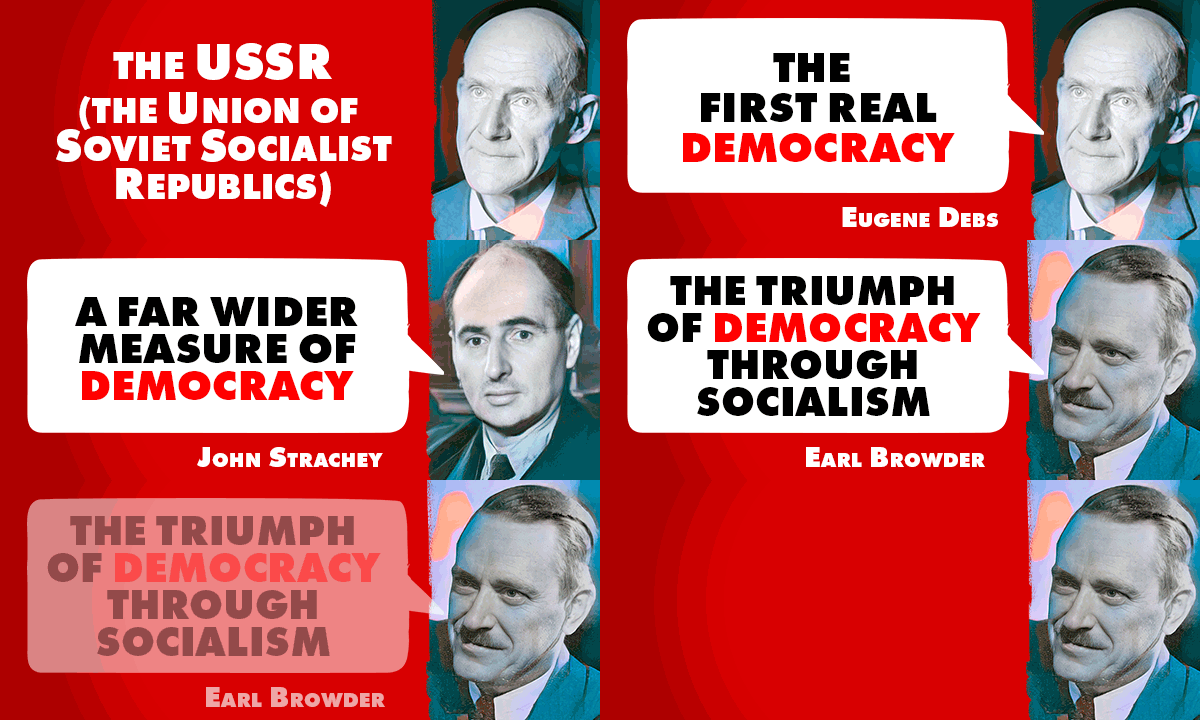
If a new socialist experiment started tomorrow, today's socialist faithful would once again proclaim that democratic socialism had truly arrived. They'd shout the good news from the rooftops, just as earlier socialists did after the birth of the USSR.
But new claims that we're witnessing the democratic socialist rapture would have as much connection with reality as all previous ones: none.
There has been no meaningful change to the recipe for socialism, so there is no reason to expect different results. Today's democratic socialism remains founded on the same dangerous form of compulsory duty that permitted authoritarians to end up in control of each earlier experiment with supposedly democratic socialism.
"Democratic socialism" is nothing more than sales shenanigans. This reality becomes vividly clear once we realize that the nations we now think of as defining authoritarian socialism were themselves sold as democratic socialism in action.
See "Democratic Socialism? Déjà Vu All Over Again" for additional details re socialists claiming the USSR, Cuba, East Germany, and even Cambodia under the Khmer Rouge were "democratic." This paper also reviews some of the totalitarian nightmares that befell these supposedly democratic societies.
Karl Marx is considered a democratic socialist
Karl Marx is the most important socialist philosopher of all time—by many orders of magnitude. Marx's thinking has defined socialism for the past 150 years, and it still does today.
You've likely heard of Karl Marx. But did you know he's said to be a democratic socialist?
Marx is labeled a democratic socialist by no less an authority than Michael Harrington, the founder of today's Democratic Socialists of America.
Harrington even dedicates one of the books he authored not to a family member or friend but to
democratic socialist, Karl Marx [32]
As we detail in "Karl Marx, 'Democratic Socialist,'" Harrington calls Marx a democratic socialist in at least three of the books he authored. He declares Marx both a "democratic socialist" and a "social democrat," demonstrating again that socialists see these terms as synonymous.[33]
Not only does Harrington say Marx is a democratic socialist, but the organization Harrington founded, the DSA, identifies as a Marxist one. (The DSA is by no means the only socialist organization claiming to represent democratic socialism or to be Marxist in orientation—essentially all of them do).
As noted in a Chicago Tribune article about the DSA's 2017 annual convention, the DSA is now "the largest Marxist organization since World War II" (an announcement that prompted convention attendees to break into song).[34] The convention even featured quotes from Marx on the signage used to make important announcements.[35]
This is the same Karl Marx, of course, whose thinking was the basis of earlier socialist experiments that went wildly wrong, such as in the USSR and the People's Republic of China (PRC).
It's impossible to overestimate the role Marx and his ideas played in both of these authoritarian nations.[36] Consider three examples from the PRC.
First, Mao Zedong, China's original socialist leader, emphasized Marx's central role in the PRC. In the famous Quotations from Chairman Mao (also known as The Little Red Book because of its small size and red color), Mao references Marx or Marxism over seventy times—for example, teaching that
the basic principles of Marxism must never be violated, or otherwise mistakes will be made.[37]
Second, Marx's doctrine remains a focus of education in China today. As reported in the South China Morning Post:
In universities, an "introduction to the basic principles of Marxism" is a mandatory course all students must pass to graduate.[38]
Third, Marx is still celebrated in China. The Chinese government went all out to commemorate Marx's two-hundredth birthday in 2018.
They made a present of a three-ton bronze statue of Marx to his hometown in Germany.[39] And they held multiple events memorializing the birth of the socialist messiah.
Here's a tweet by People's Daily, the media conglomerate controlled by the Chinese Communist Party, shows an event China's socialist government held to commemorate #KarlMarx200.[40]
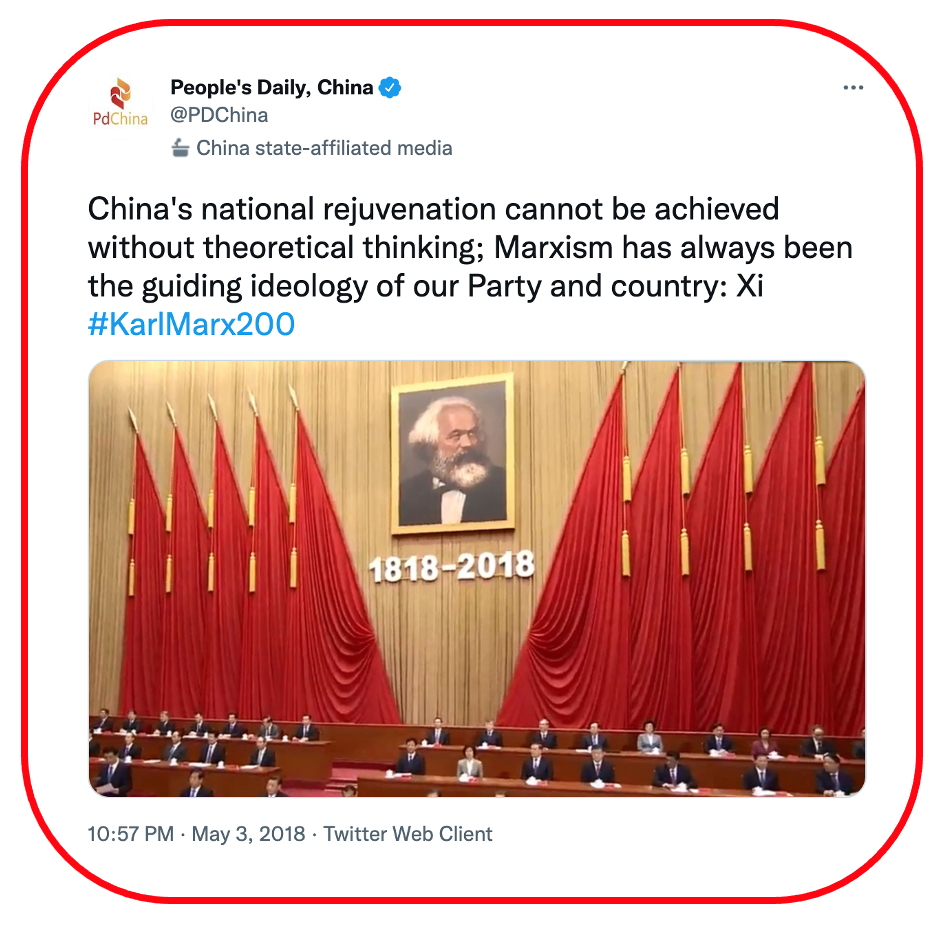
The tweet quotes China's current president, Xi Jinping, who says:
Marxism has always been the guiding ideology of our Party and our country.
In his speech celebrating Marx at this ceremony, President Xi also explained that China's government is working hard to perfect socialist democracy:
China will advance socialist democracy under the organic unity of Party leadership, the running of the country by the people, and law-based governance.[41]
Marxism is the guiding ideology of both the supposed socialist democracy in the People's Republic of China and the Democratic Socialists of America. And Marx is revered by both as well.
Today's democratic socialists want us to believe their product is something new. In reality, however, they're selling the same 150-year-old Marxist philosophy that's been the basis of every prior socialist experiment.
If today's democratic socialism was a new product, democratic socialist leaders like Michael Harrington wouldn't be claiming Marx as one of their own.
See "Karl Marx: 'Democratic Socialist'" to learn more about Marx's status as a democratic socialist. This paper also reviews the many anti-liberal beliefs Marx baked into socialism, all democratic-socialist approved.
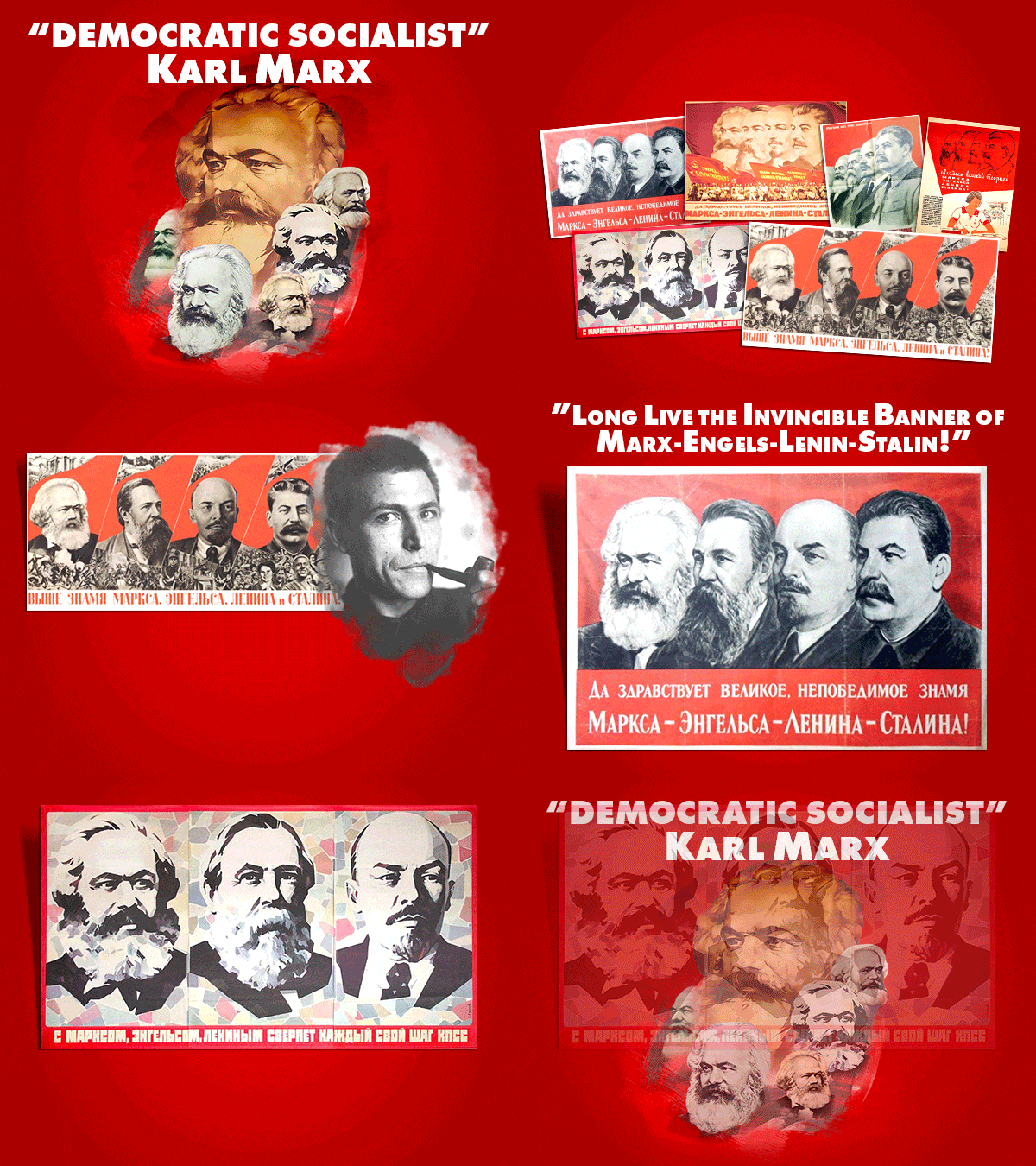
Posters featuring "democratic socialist" Marx from the USSR.
Today's democratic socialism pursues the same goal as yesterday's socialism
The defining goal of today's democratic socialism is to create a society that operates based on socialism's famous axiom: "To each according to their need."
So says Democratic Socialists of America founder Michael Harrington, among numerous others.[42] (The Chicago Tribune report on the 2017 DSA annual convention describes how quotes from Marx appeared on meeting signage. It's no surprise that "to each according to their need" was among them.[43])
But creating a society based on this saying isn't some new socialist ambition. On the contrary, it's the same objective Marx established for socialism 150 years ago.[44]
As knowledgeable socialists are aware, this goal is tied up with other long-term socialist aims. For example, to seek a world based on "to each according to their need" is to seek a world in which every business, large and small, has been eliminated.[45]
For the bulk of the twentieth century, socialists used the term "communism"[46] as their name for a society based on the "From each according to their ability, to each according to their need" standard. This was the technical meaning of "communism" in socialist literature. Stating things as socialists did last century, the aim of today's socialism is to achieve communism.
Why is the goal of today's democratic socialism identical to the goal socialism has pursued for the past 150 years? Because today's democratic socialism is fundamentally identical to the socialism of the past 150 years.
DEMOCRATIC SOCIALISTS HOLD THE SAME ANTI-LIBERAL VIEWS AS PLAIN OLD SOCIALISTS
Our current society is a liberal one; that is to say, it's based on liberal political philosophy, a philosophy that counts the protection of our individual rights as the central role of government.
Liberalism starts from the premise that our time and talents are our personal property, ours to use as we wish to define our own lives.
Socialism explicitly rejects liberalism, objecting in particular to the fact that liberalism does not impose a compulsory duty to give our time and talents to society, as socialism demands.
Any number of socialist thinkers have openly attacked liberal philosophy. For example, Mao Zedong's paper "Combat Liberalism"[47] makes his views crystal clear. Once we realize socialism seeks to "combat liberalism," it's no shock to discover socialists hold numerous views incompatible with liberal thinking.
But it may come as a surprise to learn democratic socialists hold these same anti-liberal beliefs—another demonstration that "democratic socialism" is a marketing slogan, not some new version of socialism.
There's no more important democratic socialist than Karl Marx. Yet Marx called human rights "rubbish" and "nonsense."[48] It's hard to get more anti-liberal than that.
Similarly, R. H. Tawney is considered a democratic socialist[49] despite arguing that rights should be limited because they enable individuals "to resist."[50]
Democratic socialists call specifically for the suppression of what Marx called "private labor"—our liberal right to pursue essentially any type of work we desire without society being permitted to limit our choices. Marx said that, come socialism, our private labor rights would be replaced by what he termed "directly social labor"—that is, our work under society's direct control.
Today's democratic socialists still seek to replace private labor with Marx's directly social labor. For example, in The Socialist Imperative, Michael Lebowitz[51] labels our private control of our work an "infection" that socialism must cure.[52]
The termination of our private labor rights is linked with the socialist plan to suppress "socially useless" work. Any number of today's democratic socialists call for the elimination of all supposedly useless work.
For example, Fred Magdoff asserts that "socially useless, even harmful, products and programs" today consume "as great as half of the labor force" and that a democratic socialist society would make these workers perform tasks that have the blessings of socialists instead.[53]
Socialist plans for eliminating allegedly useless work are based on the suppression of our liberal private labor rights—that is, our right to do whatever type of work we feel like, even if others think it's a waste of time.
Democratic socialists also call for eliminating private property rights—specifically our right to own a business.
Democratic socialist Marx explains that the plan is to
centralize all instruments of production in the hands of the state. … Of course, in the beginning, this cannot be effected except by means of despotic inroads on the rights of property.[54]
Eugene Debs is idolized today as the archetypical democratic socialist. We're told Debs is "a symbol of democratic socialism"[55] and "the first major Democratic Socialist in American history."[56]
Yet Debs echoes Marx's call for "despotic inroads on the rights of property" and for doing away with all private businesses.
Here are two of the countless times Debs made this demand over the decades:
The Social Democratic Party is not a reform party, but a revolutionary party. It does not propose to modify the competitive system, but abolish it. … It stands unequivocally for the collective ownership and control of all the means of wealth production and distribution—in a word, socialism.[57]
What is socialism? To answer in a single sentence, it means the collective ownership by all the people of all the means of wealth production and distribution.[58]
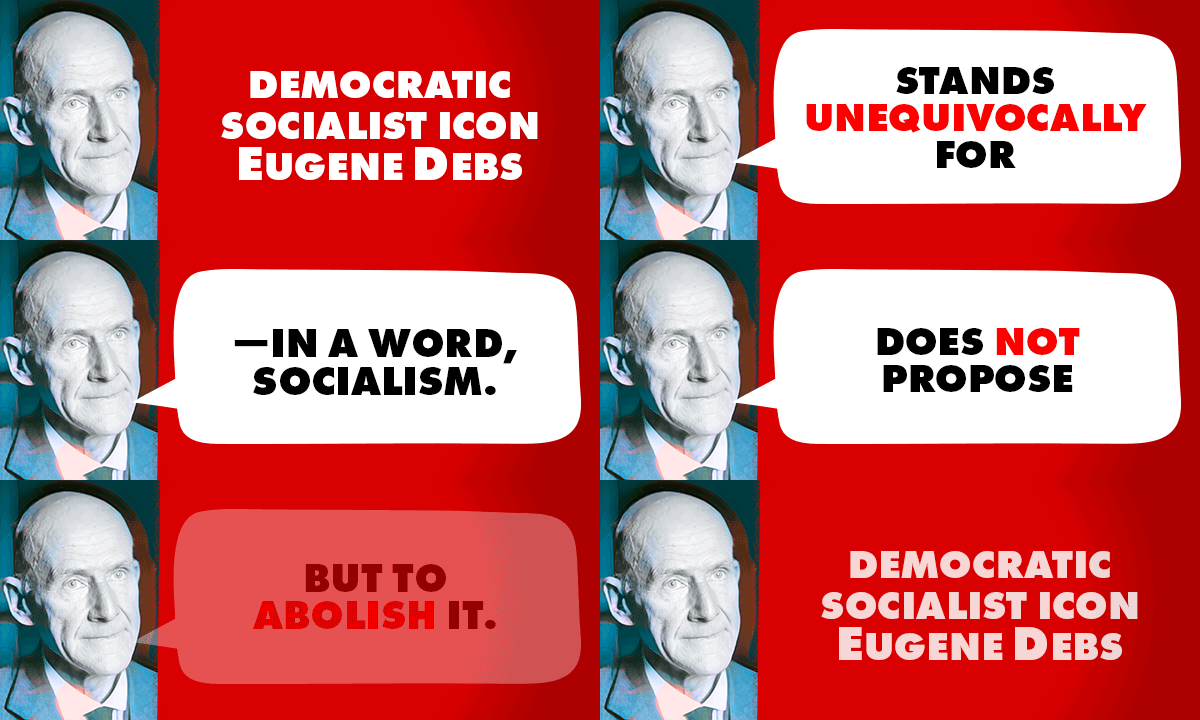
Today's democratic socialists also call for the end of private business. For example, Michael Steven Smith, in the recent Imagine: Living in a Socialist USA, speaks of socialism as a
democratically organized society that has done away with capitalist private property.[59]
Another example of democratic socialists planning on eradicating private enterprise comes from none other than DSA founder Michael Harrington.
In his article "What Socialists Would Do in America—If They Could," Harrington explains that, because it's not possible "to socialize an economy overnight,"[60] there's a need for a "transitional" phase of socialism before perfected socialism can arrive.
One consequence of the reality that socialization takes time is that
we must anticipate a corporate sector in the socialist transition.[61]
This corporate sector during the transition isn't something Harrington is excited about. It's just an unavoidable pothole on the road to completed socialism.
And any uncertainty about the ultimate outcome socialism plans for these businesses is dispelled by the analogy Harrington then uses, saying that it's as if the businesses in the socialist transition are
on death row.[62]
The founder of the DSA sees socialism as ultimately meaning just what democratic socialists Marx, Debs, and Smith say it does: a society that does away with private property rights and private enterprise.
(One advantage of the socialist plan for a transitional phase—a concept that started with Marx—is that it permits socialists to talk out of both sides of their mouths, promising there will be businesses in socialist society while all the time planning their demise.)
Many socialists attempt to minimize the concern over the elimination of our private property rights by claiming socialism wouldn't necessarily mean the end of every business. But all such promises are worthless.
Once socialist society gives itself the right to seize one set of businesses in the name of society, our liberal private property rights are defunct. After that, it's only the whims of our rulers that would determine what businesses are to be permitted this week and suppressed the next.
The bottom line is that you're welcome to be a democratic socialist despite calling human rights "rubbish," despite seeking to limit rights because they permit us "to resist," and despite calling for the suppression of both our private labor and private property rights.
And this is only a partial list of the anti-liberal things one can call for and be a democratic socialist today.
Why do democratic socialists hold the same anti-liberal beliefs that socialists have long held?
For one reason only: because democratic socialism is plain old socialism, just like keto-friendly bacon is plain old bacon.
To learn more about how socialism clashes with liberalism, see the Red Flags Press paper "A 'Defect' of Liberalism."
Today's democratic socialism is based on the same dangerous compulsory duty as yesterday's
Here's a final critical sign that democratic socialism is really plain old socialism:
Despite the word "democratic" in the label, today's socialism remains founded on the same compulsory duty that's characterized socialism from its earliest days.
In fact, today's democratic socialism is based on the very same standard of duty that socialism has demanded for 170 years, the standard reflected by the socialist axiom "from each according to their ability."[63]
Louis Blanc, who coined this phrase, used all caps to make his point when he defined it as "the DUTY."[64]
"From each according to their ability" means that whatever we can contribute to society, we must contribute.[65] This duty transforms our time into what socialism treats as society's property, as society's time.[66]
It's a dangerous type of duty that liberal philosophy outright rejects and that is radically different from the obligations of liberal societies, such as paying taxes.[67]
Socialism's requirement of "from each according to their ability" has played a significant role in one socialist experiment after another ending up an authoritarian nightmare. It's this duty that gives those running socialist society the ability to override our rights and to take control of our lives.
The duty to give our abilities to society also lies behind many other troubling aspects of socialism. For example, it's responsible for socialism's obsession with identifying and eliminating "parasites"—those of us whom socialists judge as failing to properly contribute to society.[68]
Why have hundreds of socialist thinkers[69] attacked alleged parasites in their writings? It's an automatic byproduct of socialism's foundation on this anti-liberal form of duty. (Learn the details about socialism's fixation in our paper "The Socialist Obsession: 'Parasites.'")
Despite the lessons of the past, today's democratic socialism still demands "from each according to their ability," just as yesterday's socialism did.
It's a requirement endorsed by DSA founder Harrington and any number of present-day democratic socialists.[70] It's a saying that's appeared on signage at DSA conventions.[71]
Why doesn't socialism abandon its requirement of duty? Because it wouldn't be socialism if it did, any more than liberalism would be liberalism if it added a requirement of duty analogous to the one socialism has.
Socialism is not only based on the belief that compulsory duty to society is morally correct, but it's been designed so that duty is required to create and operate a socialist society.[72] Socialism without compulsory duty is like a car without an engine.
Sure, some socialist true believers would perform their duty without compulsion. But the rest of us? It's socialist duty that gives those running a socialist society the power to make us salute.
For over a century and right up until today, socialists have believed that socialism is democracy, even though it requires an onerous form of compulsory duty.
Socialists fervor for their faith blinds them to the reality that the duty of "from each according to their ability" makes every socialist experiment an authoritarian accident waiting to happen.
The duty demanded by today's democratic socialism is the same as it ever was. Why? Because today's socialism is also the same as it ever was.
To learn how socialism's foundation on duty has contaminated so much of socialist philosophy, see our paper "The Ripple Effects of Socialist Duty."
"Democratic" Socialism
—A "Harmful Lie"
Lambasting sales and marketing in capitalist society as unethical has been a favorite socialist theme for centuries.[73] It remains a staple in socialist writing today, as exemplified by Terry Bisson's "Thanksgiving 2077: A Short Story."
In Bisson's tale, Jesse, Grandpa, and family are celebrating the November holiday in the socialist future.
Young Jesse was born after the arrival of socialism and has never heard a word of marketing nonsense (socialism having apparently delivered on its promise to eliminate all businesses and thus all sales and marketing as well [74]).
Someone at the Thanksgiving table mentions advertising in the bad old days of capitalism. Jesse is thrown off by this unfamiliar term, but Grandpa fills Jesse in:
"What's advertising?" asked Jesse. "Harmful lies," said Grandpa.[75]
There's only one problem with socialist crabbing about the "harmful lies" of marketing in capitalist society: socialists are themselves salespeople par excellence and employ every sales trick in the book.
Promoting socialism as democratic is a prime example of the reality that socialism is sales and that socialists are themselves purveyors of harmful lies.
"Democratic" socialism isn't simply marketing hype; it's dishonest and misleading hype.
Democracy is by no means intrinsic to socialism, and today's democratic socialism isn't some new recipe designed to fix the flaws that produced the disasters of the socialist past.
Rather than living up to the advertising claim of being democratic, socialism has resulted in one authoritarian nightmare after another. Selling socialism as "democratic" doesn't make it so any more than a car company advertising a car as "safe" protects you in an accident.
It's not the marketing claims but the product design that determines the outcome. And socialism has proven time and again that its design makes it unsafe at any speed.
Knowledgeable socialists know that nothing meaningful about their product has changed. They know that today's socialism remains and must remain based on a dangerous form of compulsory duty.
And as such, they know there's absolutely no way to ensure that future socialist experiments sold as democratic will turn out differently than the broken promises of the socialist past.
Given socialism's authoritarian history, most non-socialists hearing of "democratic socialism" are left with the impression that this must be some new and improved version—a version redesigned to be democratic.
But as the seven factors discussed above demonstrate, that's simply not the case.
The truly harmful lies of marketing?
They're lies like "democratic" socialism—lies that most people don't realize they're being told.
Thank you for reading "The 'Keti-Friendly' Political Philosophy"